
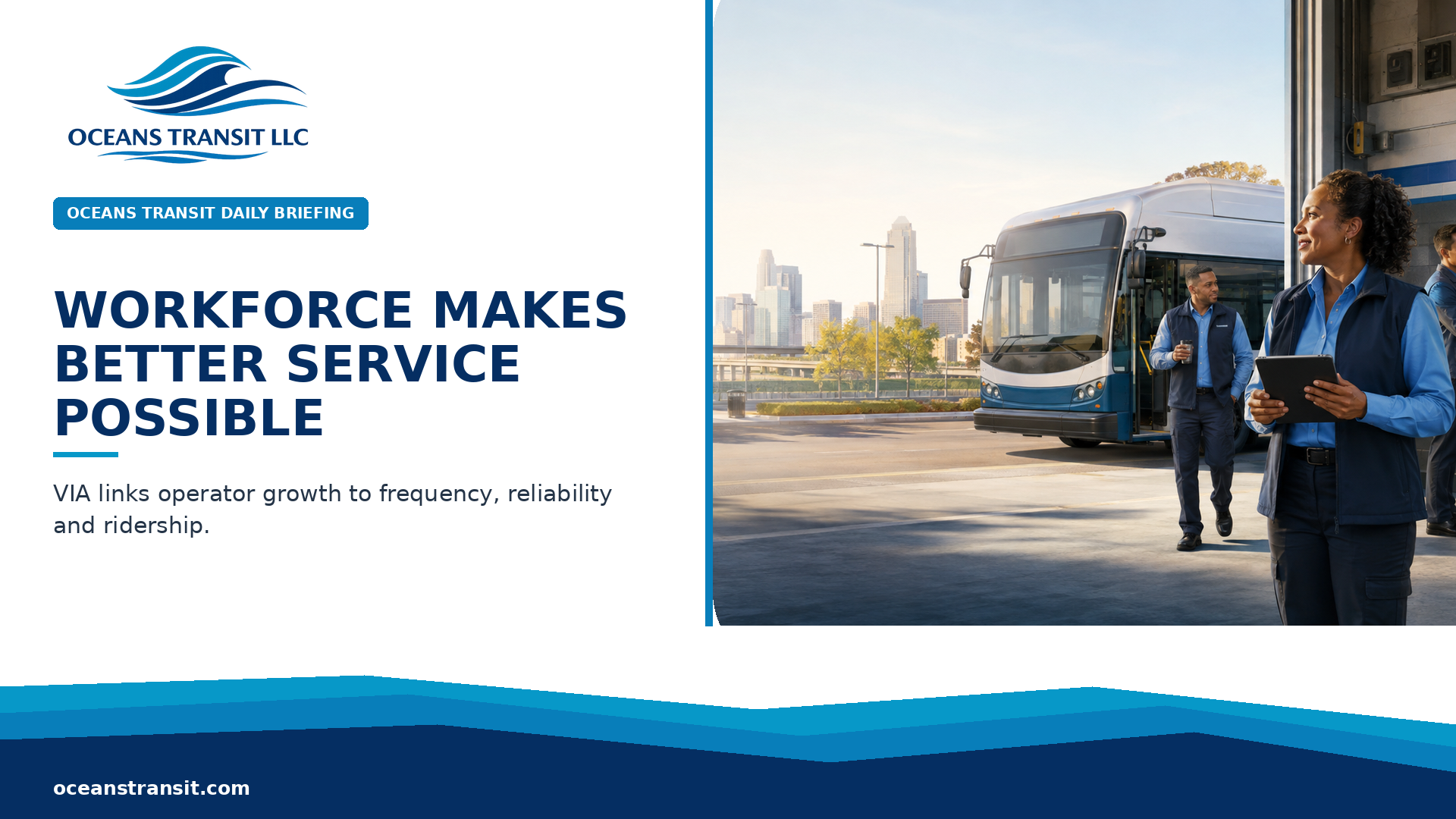
VIA Metropolitan Transit is offering a useful operating case study: strengthening the frontline workforce can create the capacity needed to improve frequency, and a more useful service product can help rebuild ridership.
VIA’s current performance information says 72% of its service now operates at intervals of 30 minutes or better. The agency also reports 31.6 million passenger trips and an 87% customer-satisfaction rating among the peer agencies it uses for comparison. Those numbers deserve attention, but the workforce figure behind them may be the most important: VIA added 108 net full-time bus operators in 2025, bringing the operator total to 907 and marking what the agency described as its strongest operator-hiring growth on record.
Local reporting from the San Antonio Express-News added a timely measurement. At an August 11 State of Transit event, VIA President and CEO Jon Gary Herrera said the agency had provided about two million more passenger trips during the current fiscal year than during the same period a year earlier. The newspaper also reported that the agency’s operator count had continued growing beyond the year-end figure published on VIA’s dashboard.
The operating chain matters
The transit lesson is not simply “hire more drivers.” Recruitment creates value only when an agency can convert applicants into safe, qualified operators; retain them after training; build workable schedules; maintain enough vehicles; and place the additional service where riders can use it.
VIA’s Better Bus Plan provides that connection. In January 2026, the agency implemented its largest group of service improvements at one time, affecting 30 routes. VIA said the expansion was enabled by the successful hiring of 107 additional full-time operators. The August 2026 service package continues the plan, including frequency and span improvements on selected routes.
This is what makes the story relevant beyond San Antonio. Operator recruiting, training capacity, retention, scheduling and service planning are frequently managed as separate departmental assignments. Customers experience them as one product. A vacancy in the operator workforce can become a missed trip. A training bottleneck can delay frequency improvements. Poor retention can force an agency to protect only the existing schedule instead of expanding it.
What is working
VIA has publicly connected workforce investment to measurable service delivery. It has also phased the Better Bus Plan rather than promising an immediate systemwide transformation. That creates opportunities to assess whether each group of changes is producing the intended improvements.
The agency’s public dashboard is another positive practice. Publishing workforce, frequency, ridership and customer-satisfaction indicators helps boards and riders see whether investments are translating into street-level results.
What needs attention
The evidence supports a positive direction, but it does not prove that every additional trip came from frequency improvements alone. Population, employment, fares, special events and other service changes can affect ridership. Agencies studying VIA should focus on the operating model rather than treating a single ridership figure as causal proof.
They should also examine instructor staffing, training throughput, early-career retention, absenteeism, scheduled versus delivered service and road-supervision capacity. Growth that cannot be sustained will eventually appear as canceled trips, overtime pressure or declining reliability.
What agencies should consider next
Before announcing a frequency initiative, build one integrated readiness plan covering recruiting targets, instructor and bus availability, qualification timelines, retention measures, maintenance capacity, schedule development and performance reporting. The plan should identify how many operators are required not only to post the schedule, but to deliver it reliably with realistic spare and absence assumptions.
VIA’s experience offers a practical message: workforce development is not an internal support function. It is service infrastructure.