
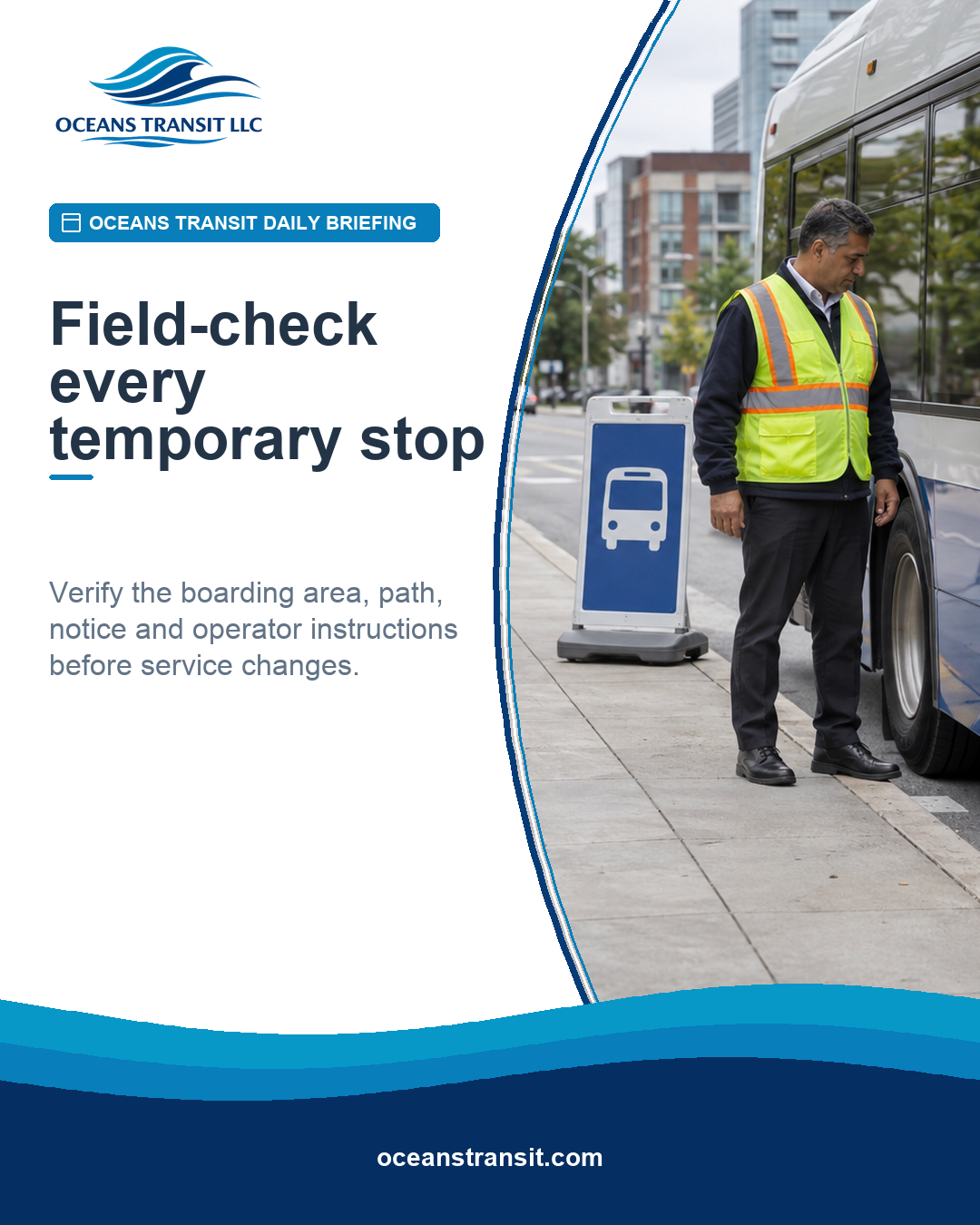
A closure notice is only one control. Before service changes, field-check the alternate stop, accessible path, rider message and operator instructions together.
Construction, events and emergency conditions routinely move or close bus stops. Current October 9 notices from transit agencies show the communication basics: identify the affected route and dates, name the stop that is unavailable and direct riders to a specific alternative.
Madison Metro's Route C notice identifies the closed stop, the railroad-construction dates, the affected evening trips and a nearby stop riders can use. An October 8 LADOT Transit detour notice lists missed stops and the nearest alternatives.
Those notices are useful examples, not evidence that every temporary location has been physically verified. The operating standard must connect the written message with conditions in the field.
Start with the boarding task
FTA's fixed-route ADA guidance webinar explains that an operator generally cannot refuse to deploy a lift at a designated stop unless the lift would be damaged or temporary conditions prevent safe use of the stop by everyone. The guidance notes that an operator should pull a reasonable distance from an obstructed stop when that can provide a usable boarding location.
FTA's ADA Circular also uses sidewalk or road construction that removes an accessible path to a bus stop as an example of a situation that may require a reasonable modification. Agencies must maintain an accessible way for individuals with disabilities to request a modification; the controlling rules and local procedures determine the response.
These federal materials establish accessibility and reasonable-modification responsibilities. The four-part field check below is an Oceans Transit recommendation for implementing them consistently; it is not a new federal checklist.
Verify four connected controls
Before the temporary stop enters service, Oceans Transit recommends one field inspection that verifies:
- Boarding area: the vehicle can stop safely and deploy required equipment without a slope, gap, obstruction or surface condition that defeats boarding.
- Path: riders can reach the temporary location from the surrounding pedestrian network without being directed into traffic, construction or an impassable surface.
- Notice: signs, web alerts, apps and customer-service scripts name the same location, route, direction, dates and nearest alternative.
- Operator instructions: the run or detour notice tells operators where to serve riders, how to report a problem and what to do when the temporary location is unusable.
A map pin or copied street intersection does not prove any of these conditions. The inspector should approach the stop from the direction riders will use, view it from seated and standing height where practical, and document the result.
Plan the exception before the first bus arrives
Temporary conditions change. A delivery truck, fence movement, snow pile, utility plate or crowd can make yesterday's usable location fail today.
The agency should define who receives a report, who can move or suspend the stop, how operators and customer information are updated and what assistance or reasonable modification process is available to a rider who cannot use the temporary location. Frontline employees should not have to invent that response in live traffic.
Close the temporary stop deliberately
When regular service returns, remove conflicting signs and digital alerts, notify operators and confirm that the permanent stop is usable again. Otherwise riders may split between two locations or wait at a sign that no longer controls service.
The observable standard is simple: a temporary stop has one verified boarding place, one usable path and one consistent instruction shared by riders, operators and customer-service staff.