
RTD connects East Colfax bus order to BRT readiness
A firm order for 47 articulated buses aligns three-door boarding, interior bicycle space and level-platform compatibility with the operating plan for Denver's East Colfax corridor.
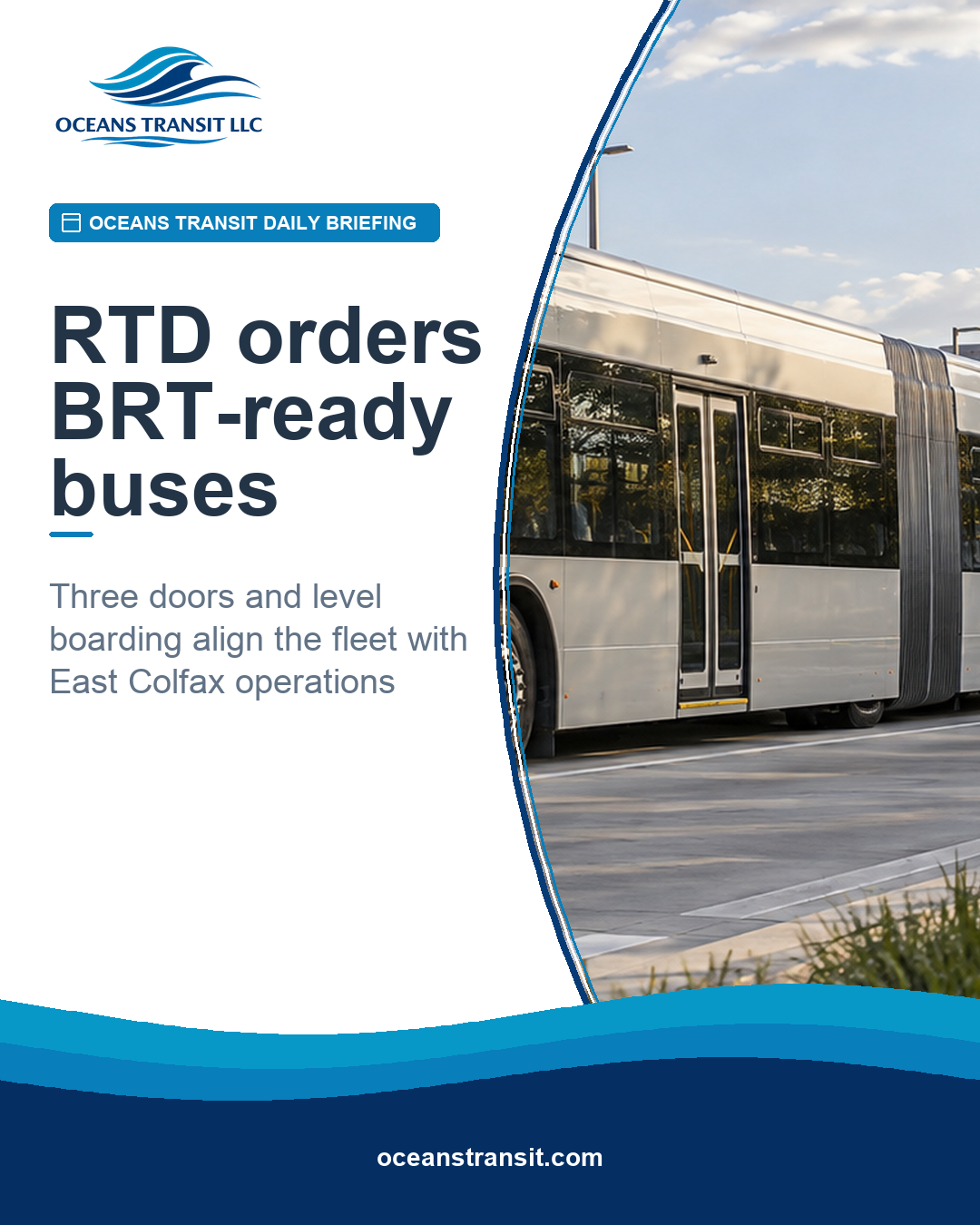
Denver's Regional Transportation District has disclosed a firm order for 47 60-foot articulated buses to support the East Colfax bus rapid transit program. The New Flyer vehicles are specified with three doors, level-boarding capability and interior bicycle racks. The contract also includes options for up to 80 additional 60-foot buses.
The options are not firm purchases, and this is not a newly approved procurement. RTD's board authorized the purchase in May. The current development is the order milestone described by RTD on September 9 and by New Flyer on September 8. Neither current announcement states a final executed order value, so the earlier $66.9 million authorization ceiling should not be presented as the price of the firm order.
That precision matters, but the larger operational story is the way the bus specification connects to the corridor design. RTD's September 8 project update describes an 8.5-mile project between Broadway and Interstate 225. The Denver segment is planned for center-running dedicated lanes from Broadway to Yosemite Street; the Aurora portion will use side-running operation in mixed traffic, with level boarding at selected stations.
Full BRT service is expected in late 2027 or early 2028. Before then, an initial bus-only-lane phase is scheduled to open September 27 between Broadway and Colorado Boulevard for Routes 15 and 15L.
Procurement defines operating interfaces
A BRT vehicle is not an isolated fleet asset. Door placement must match platform stopping positions. Floor and ramp geometry must work with the boarding edge. Interior circulation has to support faster all-door use without creating conflicts among bicycles, mobility devices and standing passengers. The maintenance program must be ready for a long articulated vehicle with corridor-specific equipment.
RTD says East Colfax platforms will be 13 inches high for buses with a 14-inch floor, and that the service design includes all-door boarding, off-board fare collection, transit signal priority and passenger-information features. It also says existing articulated buses are being modified for ramp deployment and interior bicycle storage during the early phase.
Those details turn acceptance testing into an interface exercise. Before revenue service, teams should verify:
- Docking repeatability: Operators can stop within the horizontal and vertical tolerances needed for dependable boarding at every platform type.
- Mobility-device access: Ramps deploy as intended, boarding paths remain clear and securement procedures fit the service dwell-time plan.
- Door and fare flow: Three-door use, off-board payment and inspection procedures do not create conflicting passenger movements.
- Bicycle storage: Interior racks are usable without blocking doors, aisles, priority seating or mobility-device space.
- Maintenance readiness: Lifts, bays, parts, towing procedures and technician training match the 60-foot fleet.
- Fallback operation: Operators and riders receive clear instructions when a platform, lane or vehicle feature is unavailable.
RTD reports that operator training began during the week of August 3 and includes docking, mobility-device boarding and center-lane navigation. The agency also says members of the disability community helped create instructional videos. Those are useful preparation signals, but completion should be demonstrated through observed performance: consistent stopping accuracy, successful boarding exercises, defect closure and drills under degraded conditions.
The early phase can become a learning period
The September 27 bus-only-lane opening creates an opportunity to collect operating evidence before the final BRT fleet and full corridor enter service. RTD can study running time, intersection delay, curb and lane conflicts, operator workload, customer wayfinding and boarding patterns. Findings should feed back into training, platform procedures and the acceptance plan for the 47 new buses.
The propulsion label does not determine that readiness. RTD and New Flyer describe the buses as clean diesel, but the operational value in this milestone comes from capacity and corridor compatibility, not a broad environmental claim.
East Colfax will succeed only if vehicle, street, platform, fare system and workforce behave as one service. The order advances one part of that system. The next test is whether RTD uses the time before full operation to verify every interface riders and operators will depend on.