
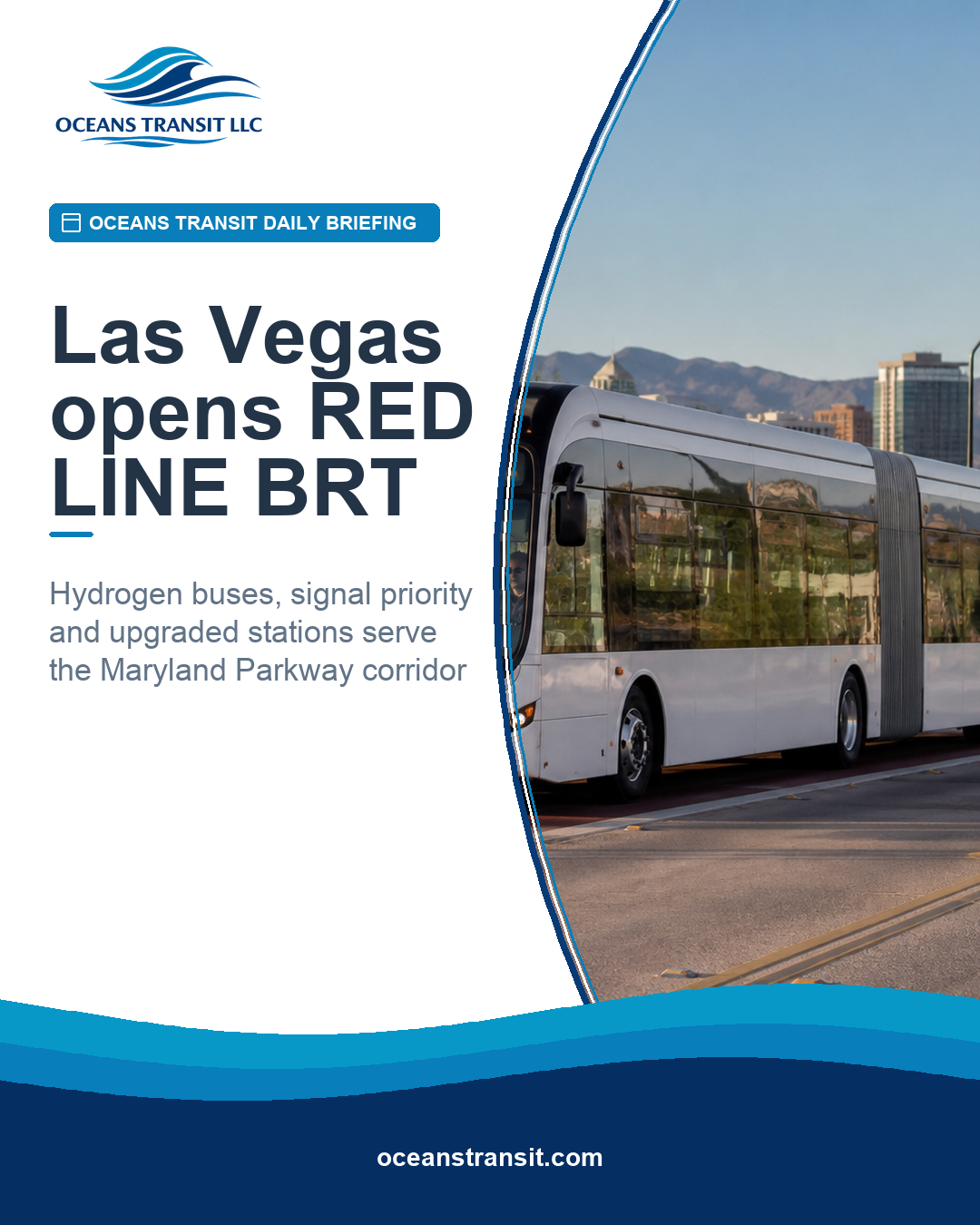
Las Vegas RED LINE opens with hydrogen buses and faster service
RTC Southern Nevada opened the Maryland Parkway RED LINE on August 23, pairing hydrogen buses with transit-priority and passenger-access improvements.
The Regional Transportation Commission of Southern Nevada opened the Maryland Parkway RED LINE bus rapid transit service Sunday, August 23. The new line replaces Route 109 and extends service between the South Strip Transit Terminal, Harry Reid International Airport, the University of Nevada, Las Vegas, downtown and the Las Vegas Medical District.
The launch is a substantive transition from construction to passenger service, although work along parts of the corridor is continuing. RTC's service-change announcement told riders to expect delays from ongoing roadway and utility work and to review the new schedules before traveling.
A corridor project, not only a bus route
The City of Las Vegas describes the Maryland Parkway project as a $378 million corridor investment. The corridor is home to about 63,000 residents and 109,000 jobs and previously carried approximately 9,000 transit riders and 35,000 vehicles per day.
The project combines transit operations with street and passenger improvements. RTC and city materials identify shared bus-and-bike lanes, wider sidewalks, additional lighting, upgraded crossings, shade trees and improved shelters. The service uses 60-foot zero-emission hydrogen fuel-cell buses.
Smart Cities Dive reported on August 24 that buses are scheduled every 12 minutes during the day and that transit signal priority and dedicated outside lanes are expected to reduce bus travel time by about 20%. Those are project expectations; actual travel-time and reliability results will require post-launch measurement.
Opening-day operations deserve disciplined monitoring
New bus rapid transit service often introduces several changes at once: vehicles, stations, running times, signals, passenger information and operator work. A smooth opening depends on how those elements behave together under real traffic, boarding and weather conditions.
Early performance monitoring should distinguish between temporary construction effects and persistent operating problems. Useful measures include:
- travel time and on-time performance by segment and time of day;
- dwell time at high-volume stations;
- signal-priority availability and failure reports;
- pass-ups, crowding and wheelchair-boarding performance;
- hydrogen fueling reliability and spare-vehicle requirements; and
- heat, shade and walking-access conditions at stations.
The fuel-cell fleet adds a workforce consideration. Operators, maintainers, road supervisors and emergency responders need role-specific preparation for vehicle isolation, fueling-area controls, towing and incident communication. The technology should be treated as a defined operating system, not simply a new propulsion label.
A broader test for BRT delivery
The RED LINE is one of several U.S. bus rapid transit projects opening in 2026. Its value will be judged by whether the combined investment produces reliable, understandable and comfortable trips in a demanding climate.
The corridor's shade and pedestrian improvements are operationally relevant. A faster bus does not create a complete trip if riders cannot reach or wait at the station safely and comfortably. Las Vegas' extreme heat makes shelter performance, tree establishment and walking conditions part of the customer-experience record.
RTC also introduced a new See & Say reporting platform with the August service change for safety, security, maintenance and cleanliness concerns. The previous Transit Watch application is scheduled to retire September 1, creating a short transition period when clear public messaging matters.
As of the August 24 research cutoff, RED LINE passenger service was operating while final corridor construction continued. The next credible story will come from performance evidence: whether service delivers the expected travel-time improvement, whether the fleet and signal systems are dependable and whether the station environment works for riders throughout the day.