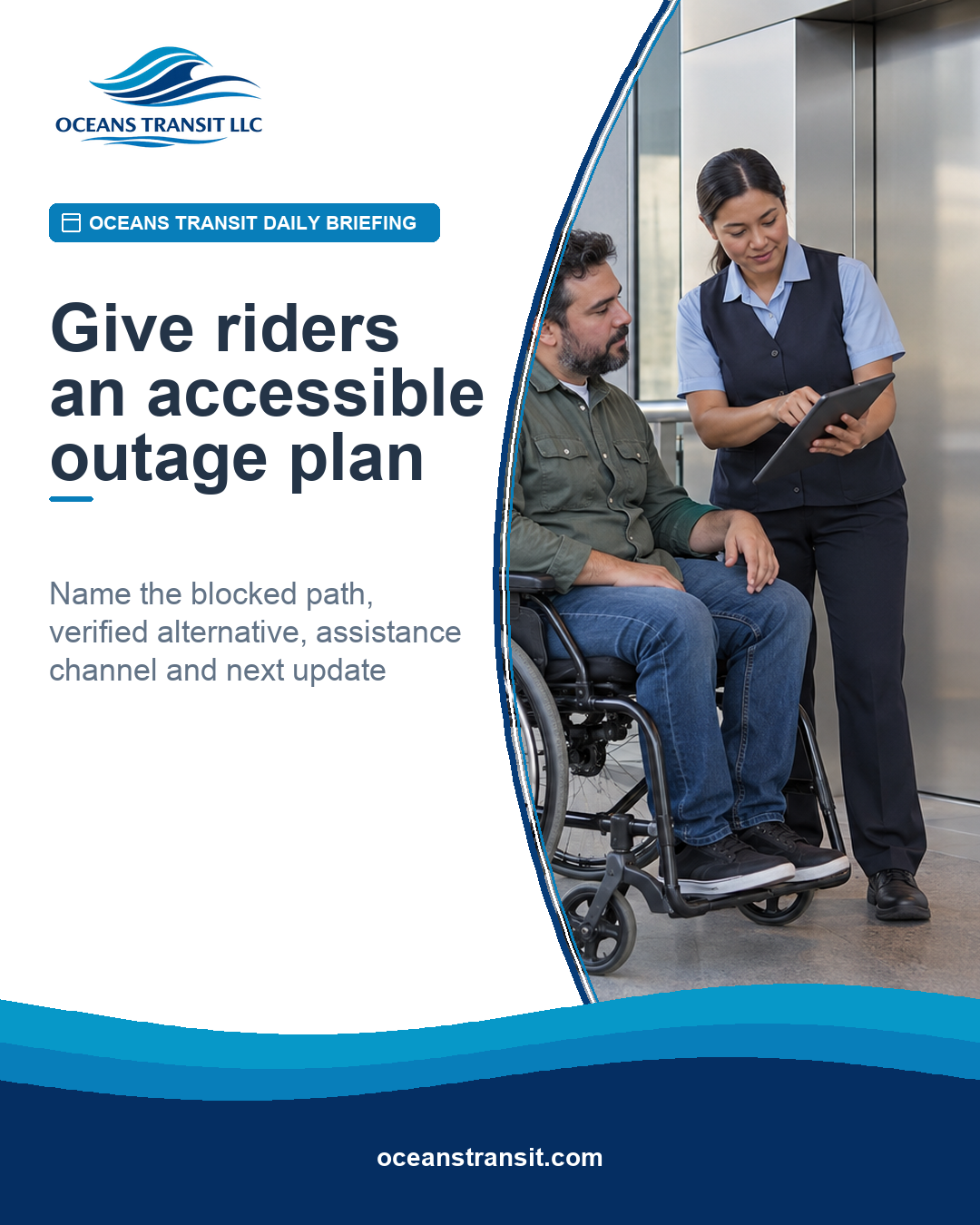
An elevator outage is not only a maintenance event. When it blocks an accessible path through a transit station, it becomes a service-access problem that requires an effective accommodation and timely rider information.
The Department of Transportation's Americans with Disabilities Act regulation requires transit providers to maintain accessibility features—including elevators, lifts, securement devices, signs and communication systems—in operative condition. 49 CFR § 37.161 also requires prompt repair and reasonable steps to accommodate riders who would otherwise use an out-of-service feature.
The regulation permits isolated or temporary interruptions for maintenance or repairs. That allowance does not erase the obligation to respond when the interruption prevents a rider from using the service.
Effective accommodation depends on the trip
FTA's ADA Circular 4710.1 explains that an agency's chosen accommodation must be effective. For an elevator that blocks station access, possible measures include visual and audible announcements at other stations and accessible shuttle service around the affected station.
The appropriate response depends on the station layout, direction of travel, available elevators, nearby accessible stations, connecting service and the rider's destination. A message that merely says “elevator out of service” identifies a defect but does not necessarily give the rider a usable trip.
Planned work deserves the same access analysis. FTA recommends scheduling maintenance during non-service or lower-demand periods where practicable, considering the systemwide access effect, providing replacement service when necessary and avoiding simultaneous elevator shutdowns at multiple busy rail hubs.
The four-part outage message
Oceans Transit recommends that every customer-facing elevator notice answer four questions. This is an operational communication standard, not additional federal regulatory text.
- What accessible path is unavailable? Name the station, elevator, entrance, platform or direction affected.
- What usable alternative exists? Give the alternate entrance, elevator, station, route or shuttle and explain any direction-of-travel limits.
- How can a rider get assistance? Provide a staffed location, call point, telephone number or other accessible channel that is actually monitored.
- When will the information be updated? Give the next update time or restoration status. Do not promise a repair time that maintenance has not confirmed.
The same facts should reach the website, app or alert feed, station signs, public-address announcements, customer-service staff and operations control. Information that conflicts across channels can turn a workable accommodation into a missed trip.
Verify the full path before publishing
Before directing riders to an alternative, a designated employee should verify that the entire route is usable. That check includes the alternate elevator, gates, platform connection, pedestrian path, operating hours and any transfer needed to resume the intended trip.
The verification should be time-stamped and repeated when conditions change. When the feature returns to service, the agency should close the alert across every channel rather than leaving riders to wonder whether an old notice is still active.
The federal requirement is to maintain accessible features, repair them promptly and take reasonable steps that effectively accommodate affected riders. The four-part message and end-to-end path check are Oceans Transit recommendations for making that responsibility observable in daily operations.