
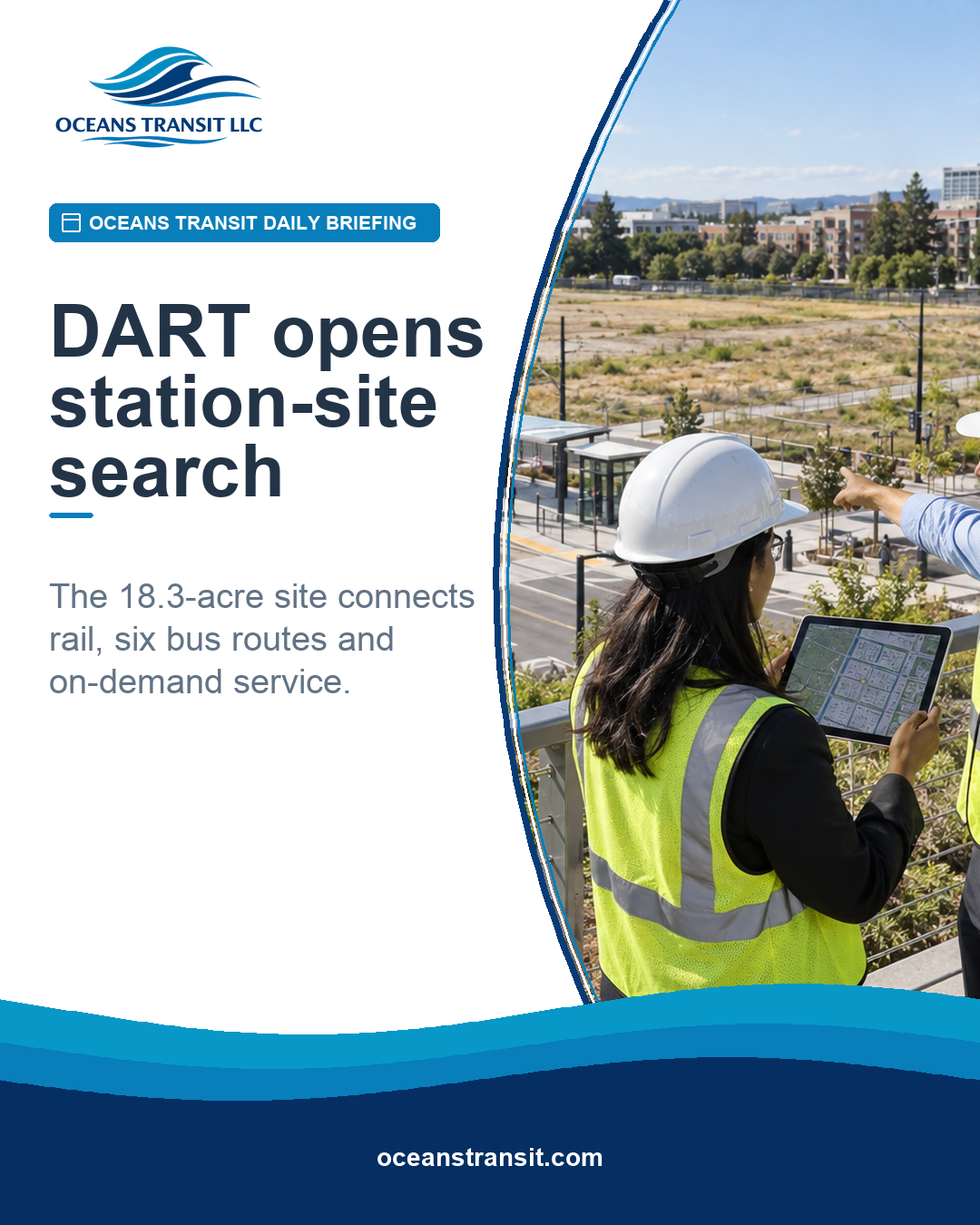
DART has opened a two-stage search for a development team and concept for 18.3 acres at the Red Line's Westmoreland Station in Southern Dallas.
Dallas Area Rapid Transit has issued a Request for Qualifications and Concepts for an 18.3-acre, agency-owned site at Westmoreland Station. The October 8 announcement starts a two-phase process to identify both a qualified development team and a concept for the Southern Dallas property.
The DART announcement says the agency wants a proposal that supports economic development, strengthens transit connections and complements the surrounding community. The release does not announce a selected developer, construction start or completed design.
A site with several transit connections
Westmoreland Station, at 2646 South Westmoreland Road, is the southern terminus of DART's Red Line. DART says the station also connects with six bus routes and GoLink on-demand service.
That combination gives the solicitation more than a real-estate dimension. The eventual concept will have to function around an operating transfer point, preserve rider access and use the site's rail, bus and on-demand connections as part of the development rather than as background infrastructure.
DART describes the project as part of a wider transit-oriented development portfolio that includes Palladium Buckner Station, SMU/Mockingbird Station, Trinity Mills Station and Addison Junction. The agency says the broader strategy is to use property near transit to create destinations where people can live, work and connect without relying solely on a car.
The useful questions begin before design
The announcement establishes the opportunity, not the performance standard. Oceans Transit recommends that agencies evaluating station-development concepts make the transit outcomes observable from the beginning. A review framework can ask:
- whether walking and rolling routes remain direct, legible and accessible;
- whether bus bays, rail platforms and on-demand pickup areas can operate safely during construction and after opening;
- whether the concept protects space for future service and passenger growth;
- how deliveries, parking, emergency access and curb activity interact with transit operations; and
- which measures will show that the project improved access rather than only increasing activity near the station.
These are Oceans Transit evaluation recommendations, not requirements announced by DART.
Protect the operating station during delivery
Transit-oriented development can fail its basic purpose if construction staging blocks the path riders need, temporary wayfinding is unclear or permanent curb design creates conflicts at the station. The development agreement and construction plan should assign responsibility for maintaining accessible routes, keeping customer information current and coordinating service changes with operations.
The same discipline applies to the completed project. Residential or commercial density near transit does not automatically produce convenient transit access. Entrances, crossings, lighting, transfer paths and curb management determine whether the connection works in practice.
What comes next
DART's two-phase process will first identify the development team and concept. Interested developers are directed to the agency's transit-oriented development page for the solicitation and related information.
For transit leaders, the transferable lesson is to define public-transportation performance before a preferred concept hardens. The station must continue to work as a station throughout planning, construction and long-term operation.